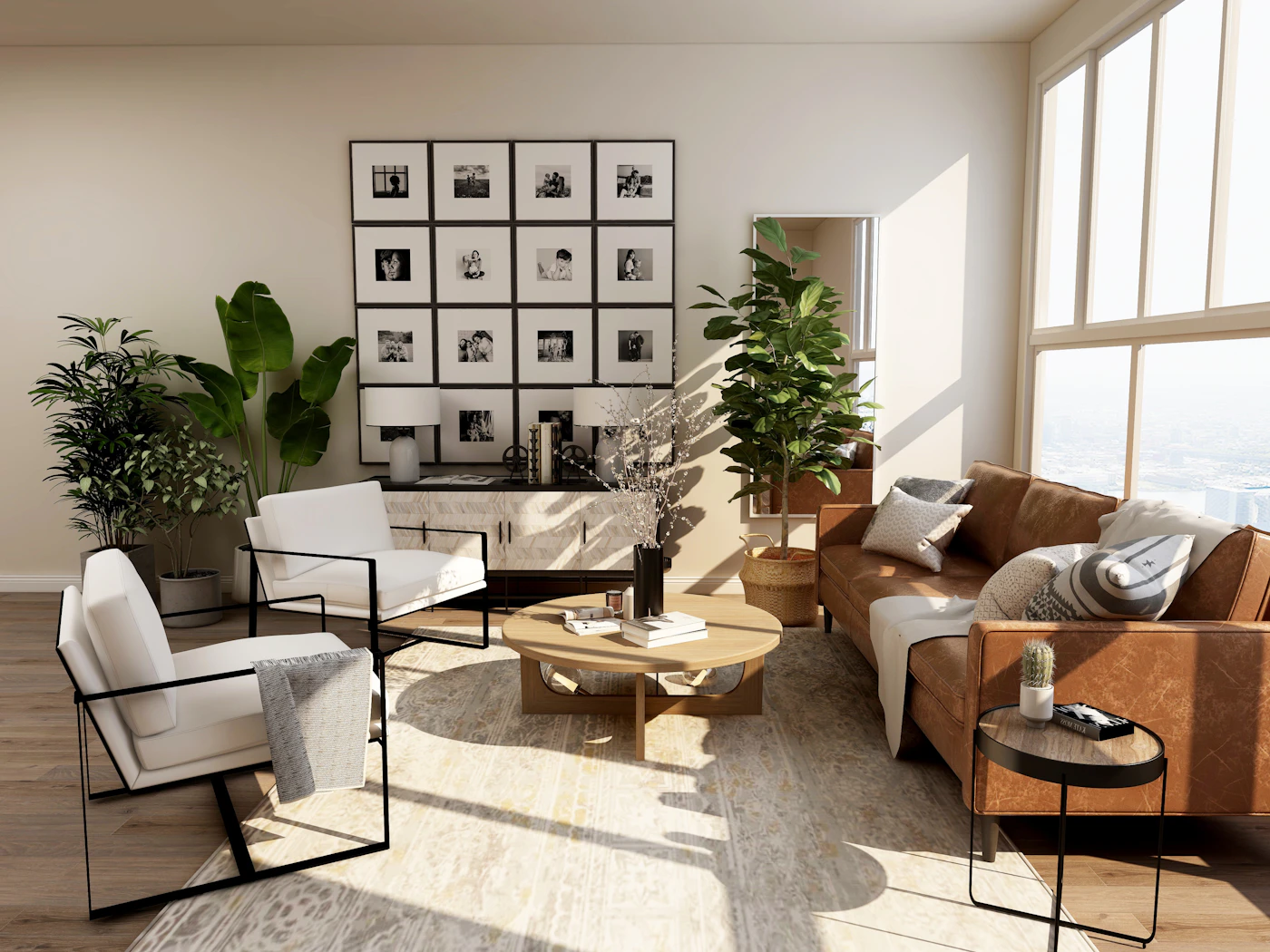
Layering rugs looks like a purely decorative flourish, and it's often introduced that way, but it does real functional work in a small room — anchoring a specific zone within an open space, adding texture without adding furniture, and giving a rented or budget-limited room a more finished feel than a single rug can achieve alone.
Start with a large, neutral base layer
The bottom rug should be the largest, simplest piece — a natural fiber like jute or sisal works particularly well, since its texture reads as intentional without competing for attention. This base layer's job is covering the full floor area of the zone, not making a statement on its own.
The top layer is where personality goes
A smaller, more patterned or colorful rug placed on top of the neutral base is where the visual interest lives — this is the layer that can be bold in a way the base layer shouldn't be, since it's a smaller area and easier for the eye to accept as a deliberate accent rather than an overwhelming choice.
Placement rules that keep it from looking accidental
The top rug should sit at an angle or be clearly offset from center, rather than centered precisely on the base rug, which can accidentally read as a mistake rather than a choice. A slight rotation, or positioning it to one side under a specific piece of furniture like a reading chair, signals that the layering was intentional.
Keep the pairing to two rugs, not three
It's tempting, once the effect works, to add a third layer. In a small room this almost always tips from intentional into cluttered — two rugs, a base and an accent, is the configuration that reads as considered in most small spaces. A third layer needs a genuinely large room to avoid feeling busy.
